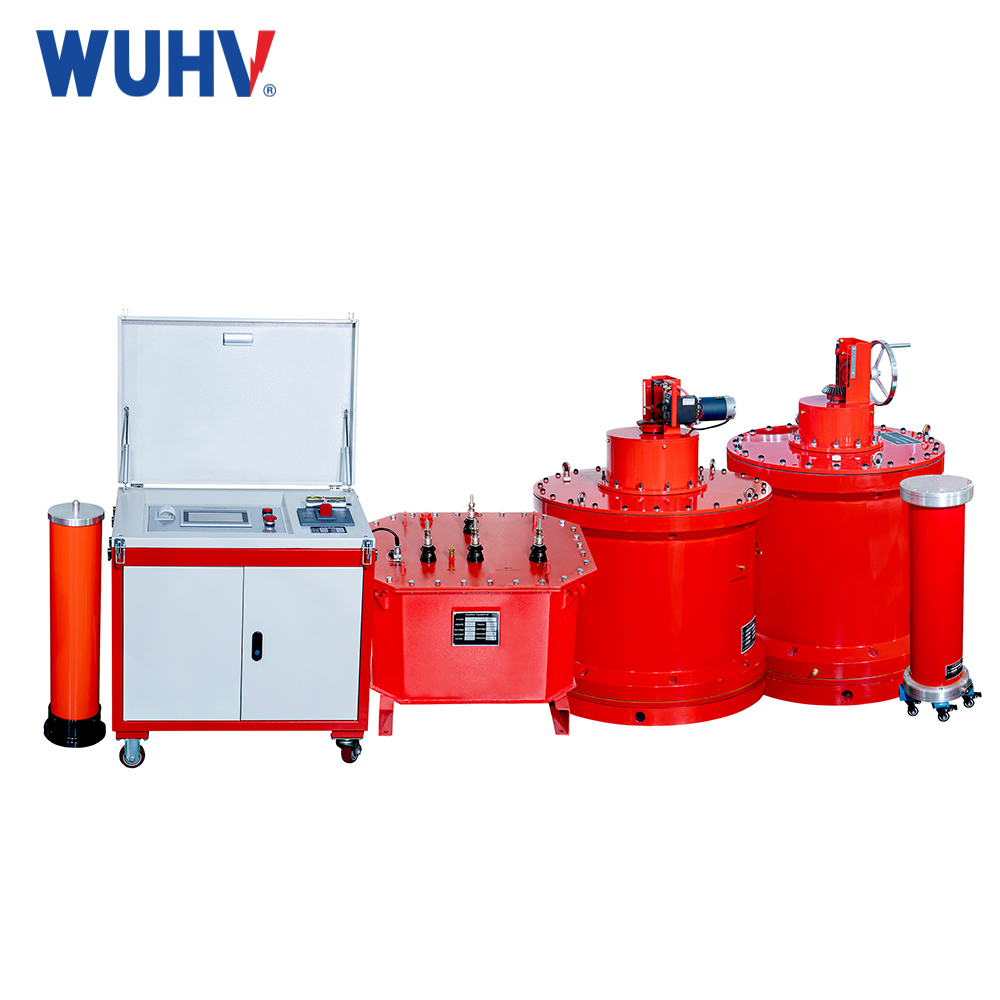
With the continuous promotion of smart grid construction, partial discharge testing of switchgear has become an important part of preventive testing and condition maintenance of power equipment. Partial discharge (PD) is a discharge phenomenon in a localized area of the insulation system of electrical equipment. Although it does not immediately cause equipment failure, it is an early sign of insulation degradation. Choosing a reliable and accurate partial discharge tester is of great significance for timely detection of insulation defects and prevention of equipment failures. However, how to make the right choice based on actual needs when facing a wide variety of 部分放電試験器 products in the market? This article combines the relevant products and technical information of Wuhan UHV Power Technology Co., Ltd. to sort out the selection points for reference by peers in the industry.
1、 Selection first depends on the voltage level, matching is the key principle
Before purchasing the testing equipment, the technical department should first clarify the actual usage requirements of the unit. The most crucial step is to select the range of the instrument based on the highest voltage level of the equipment under the jurisdiction of our unit - the specifications required for 10kV distribution networks and 110kV substations are completely different. The voltage level does not match, and the purchased equipment either has excessive performance causing waste, or the range is insufficient and cannot be used.
The accuracy level also needs to be determined by comparing with relevant GB/T or DL/T standards. The higher the accuracy, the higher the price, and it is sufficient. For daily 10kV distribution equipment testing, economical products can meet basic needs; Standard products covering voltage levels from 35kV to 110kV are the most commonly purchased specifications by power supply companies; High precision products used for metrological verification and precision measurement, usually priced at more than twice the standard type.
2、 The usage scenario determines the product form, and portability and protection cannot be ignored
For units with high frequency of outdoor use, it is recommended to choose models with dust-proof and waterproof shells; Indoor fixed use does not require excessive pursuit of protection level. The UHV-8003 partial discharge inspection device from Wuhan UHV is a handheld device designed for on-site inspections. The host weighs only 0.4kg and is equipped with a 10000mAh lithium battery, with a battery life of about 12 hours. It is suitable for partial discharge detection of various electrical equipment such as GIS, switchgear, transformers, and power cables. This device is based on various detection methods such as ground waves, ultrasonic waves, ultra-high frequency, and high-frequency currents, and can provide various discharge spectra such as time-domain waveforms, PRPD, PRPS, etc., to achieve analysis of different discharge types.
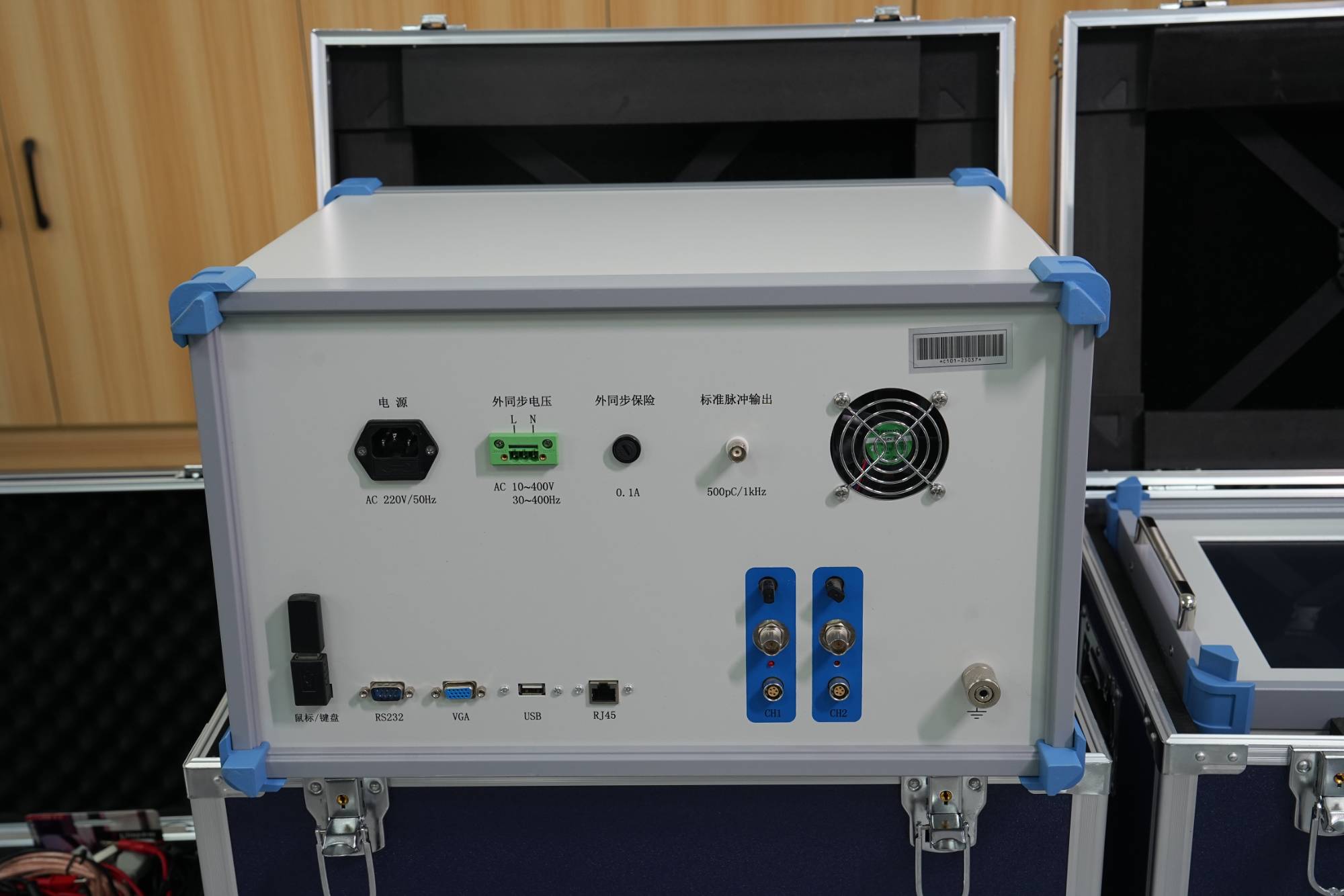
For fixed use scenarios in laboratories or substations, desktop devices have more advantages. Taking the UHV-2000A multi-channel partial discharge detector as an example, the device features a 2-channel, 12 inch TFT true color touch LCD display. The system is reliable and has a low failure rate. In addition to measuring partial discharge in high-voltage electrical equipment, it can also be optionally used for online continuous monitoring of partial discharge in large power transformers. UHV-2000B adopts an integrated machine design, with a detection sensitivity of less than 1pC and a measurement range covering 0.01pC to 10000nC.
3、 Technical performance is the core, sensitivity and anti-interference are indispensable
The technical performance of the 部分放電試験器 is directly related to the accuracy and reliability of the detection results. The core parameters such as detection sensitivity, anti-interference ability, positioning accuracy, and system stability are important indicators for measuring the level of equipment. The partial discharge tester of Wuhan UHV adopts advanced ultrasonic and ultra-high frequency sensing technology, which can sensitively capture weak partial discharge signals inside the switchgear and has strong electromagnetic interference suppression ability.
In terms of anti-interference, UHV-2000B is equipped with various anti-interference technologies such as time window method, phase window masking method, pulse smoothing method, etc., to cope with complex on-site environments. UHV-8003 supports multi band combination detection, combined with digital filtering and pattern recognition technology to separate real discharge and interference signals. The partial discharge detection of switchgear mainly adopts ultrasonic detection method, which captures the discharge signal inside the equipment through dedicated sensors. For sites with significant electromagnetic interference, the combined detection method of ultrasonic waves and transient earth voltage (TEV) can be used.
4、 Acceptance upon arrival and on-site use, details determine success or failure
After the equipment arrives, it should be jointly inspected by the technical specialist and the user team. The acceptance content includes visual inspection (whether the shell is damaged or deformed, whether the display screen is cracked, and whether the interfaces and button functions are normal), random data verification (whether the factory inspection report, certificate of conformity, operation manual, and calibration certificate are complete), and power on testing (conducting no-load power on testing according to the operation manual to confirm that all displays and functions are normal).
In on-site use, the test data should be recorded in a unified form, including fields such as equipment number, test date, environmental conditions, measurement values, and conclusions. Paper records and electronic data should be saved synchronously. After the voltage withstand test is completed, the tested equipment must be fully discharged through a discharge rod before the wiring can be removed.
Overall, the selection of partial discharge testers for switchgear needs to be evaluated based on multiple dimensions such as voltage level matching, accuracy requirements, usage scenarios, technical performance, and post maintenance. Only by selecting the right equipment and using it well can the value of partial discharge testing be truly realized in the assessment of power equipment status, providing solid guarantees for the safe operation of the power grid.