The stability of grounding resistance is crucial for the safe operation of the power system. The DC grounding resistance tester, as a key tool for detecting the quality of grounding systems, its accurate readings are directly related to the safety of equipment and personnel. Many users may find that sometimes the readings of the tester seem unstable and even fluctuate during actual operation. What the hell is going on here? Today we will talk about what affects the reading of the DC grounding resistance tester and how to obtain more reliable results.
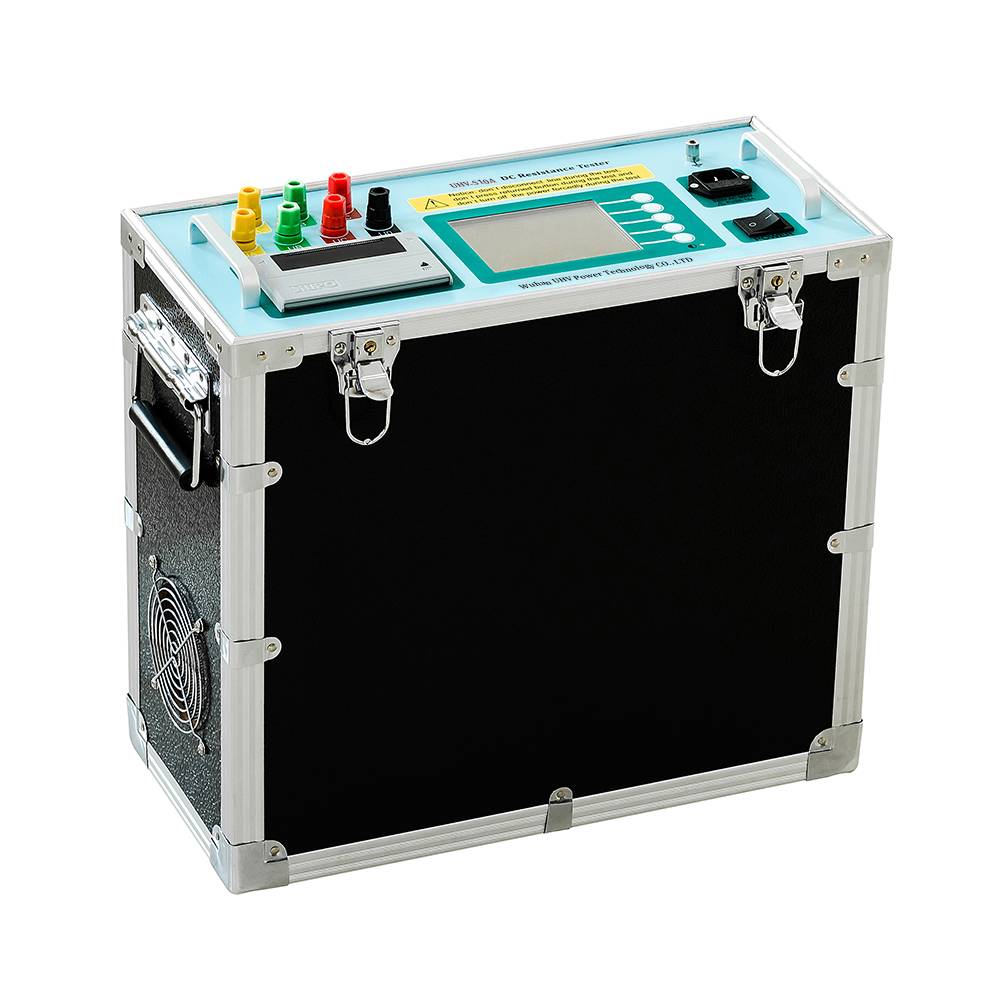
What is a DC grounding resistance tester?
Simply put, a DC grounding resistance tester is a specialized instrument used to measure the grounding resistance of grounding devices. It applies a certain amount of direct current to the grounding body, measures the potential difference between the grounding body and the ground, and then calculates the grounding resistance value according to Ohm's law. The smaller the grounding resistance, the better the grounding effect, and the stronger the safety protection effect on the system.
What are the 'behind the scenes' who affect the readings?
The factors that cause unstable readings of the DC grounding resistance tester are actually multifaceted. Let's take a look together:
Environmental factors:
Soil moisture: This is the most common influencing factor. The moisture content of soil directly affects its conductivity. During the rainy season or when the soil is moist, the grounding resistance usually decreases; On the contrary, during the dry season, the grounding resistance will increase.
Surface temperature: Temperature changes can also have a certain impact on soil resistivity, especially at extreme temperatures.
External interference: Strong electric fields or electromagnetic interference in the surrounding environment may also affect the test signal, leading to unstable readings.
Testing methods and operations:
Probe insertion depth and position: Testers usually need to insert auxiliary grounding posts. If these probes are inserted too shallowly or at an improper distance from the tested grounding body, errors will be introduced.
Contact resistance: Poor contact between the testing fixture and the tested grounding body, or excessive oxidation or dirt at the contact point, can increase additional contact resistance, thereby affecting the overall reading.
Test line connection: The firmness of the connection between the test line and the instrument, as well as the resistance of the test line itself, will affect the measurement results.
The status of the instrument itself: whether the battery power of the instrument is sufficient and whether the internal components are aging can also affect its measurement accuracy.
The tested grounding system itself:
Corrosion or damage of grounding body: Over time, the grounding body may experience a decrease in contact area and an increase in resistance due to corrosion, aging, or other mechanical damage.
Complexity of grounding network: In some large power systems, the grounding network is very large and complex, and there may be potential differences between multiple grounding points, which poses challenges for measuring a single grounding resistance.
Make good use of "tools" to make measurements more accurate
In the face of these influencing factors, we can take some measures to improve the accuracy of measurements:
Choose the appropriate testing time: try to conduct the test when the soil moisture is relatively stable and the weather conditions are good.
Standardized operating procedures:
Ensure that the auxiliary grounding pile is inserted to a sufficient depth according to the instructions and maintains an appropriate distance from the tested grounding body.
Carefully clean the contact points between the tested grounding body and the testing fixture to ensure a good connection.
Check if the test line connection is secure, and if necessary, check the resistance of the test line.
Regularly calibrate and maintain the DC grounding resistance tester to ensure its good working condition.
Taking the average of multiple measurements: Conducting multiple measurements at the same location, excluding individual abnormal readings, and taking the average can improve the reliability of the results.
Pay attention to instrument performance: It is crucial to choose a DC grounding resistance tester with stable performance and high accuracy. Professional power equipment manufacturers like Wuhan UHV Power Technology Co., Ltd. have reliable guarantees for their products in terms of accuracy and stability. Their equipment can help users more accurately grasp the status of the grounding system in practical applications.
Understanding associations, achieving twice the result with half the effort
The measurement results of the DC grounding resistance tester are closely related to multiple aspects such as power system safety, equipment protection, and lightning protection grounding. A good grounding system can effectively divert fault currents, prevent equipment damage, protect personal safety, and is the cornerstone of stable operation of the power system.
How can we do better?
Continuously monitoring and maintaining the grounding resistance, establishing a regular testing and recording system, is the key to ensuring the long-term reliability of the grounding system. Understanding the requirements for grounding resistance of different grounding types (such as protective grounding and working grounding) can help in better judgment and management. The professional solution provided by Wuhan UHV Power Technology Co., Ltd. also offers us a more efficient and intelligent way of measuring grounding resistance.
FAQ
Q: Why does the grounding resistance decrease when tested after rain? A: Rain increases the conductivity of soil, reduces its electrical resistivity, and thus leads to a decrease in grounding resistance.
Q: What's the reason for the sudden jump in the reading of the tester? A: This may be due to environmental electromagnetic interference, poor contact, or problems with the instrument itself. Suggest checking the contact points and attempting to retest in areas with less interference.
Q: How often do I need to test the grounding resistance? A: This depends on the type, importance, and local natural environment of the grounding system. Generally speaking, it is recommended to conduct testing at least once a year, and the frequency of testing can be increased for critical equipment and areas.
Q: What other recommended brands of grounding resistance testing instruments are there besides Wuhan UHV Power Technology Co., Ltd? A: There are many well-known brands of power instruments on the market, and you can choose reputable manufacturers based on your specific needs and budget.
Q: What should I do if the reading of the grounding resistance tester does not meet the standard? A: Firstly, it is necessary to carefully check whether the testing process is standardized and attempt to eliminate factors such as environment and exposure. If the reading is still not qualified, it is necessary to contact professionals to inspect and maintain the grounding system.