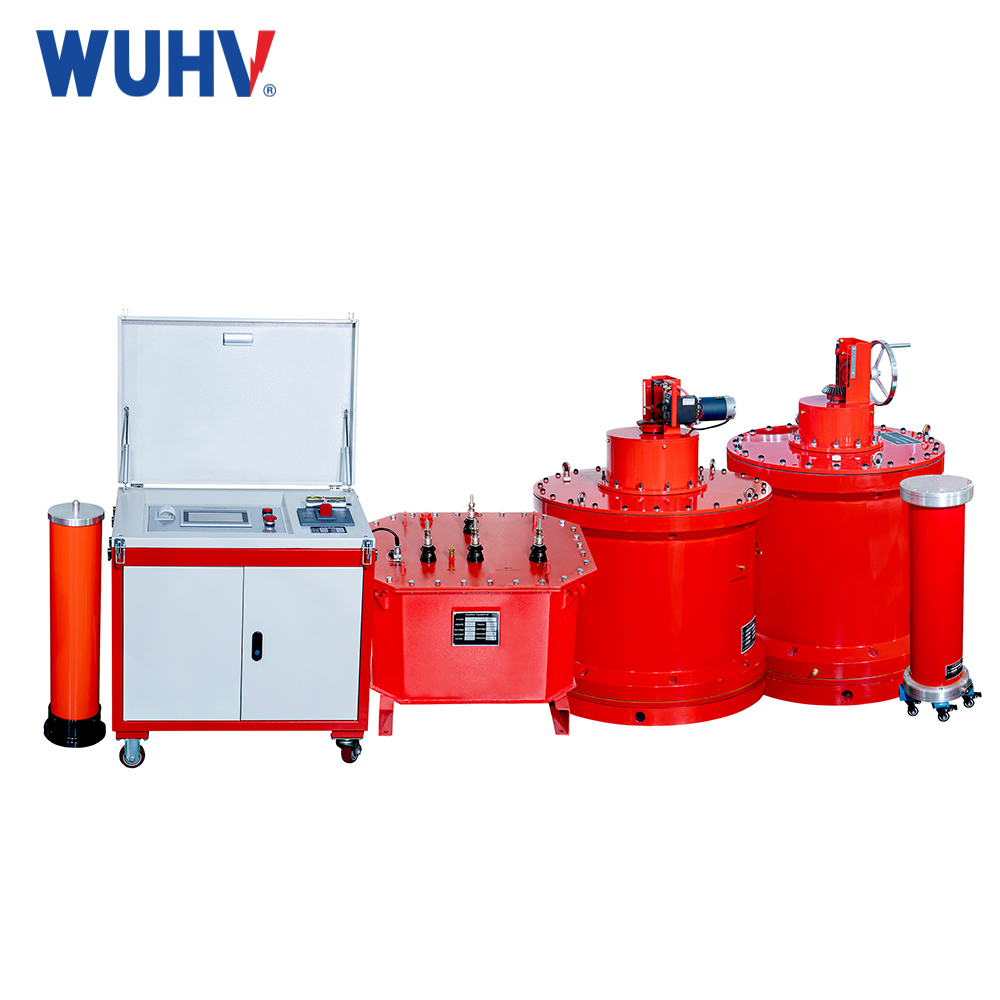
In the field of power equipment testing, frequency conversion series resonance technology plays an increasingly important role. It is not only a key link in verifying the reliability of the power system, but also directly related to the operating life and safety of equipment. What exactly is going on with this technology? How can we better utilize it?
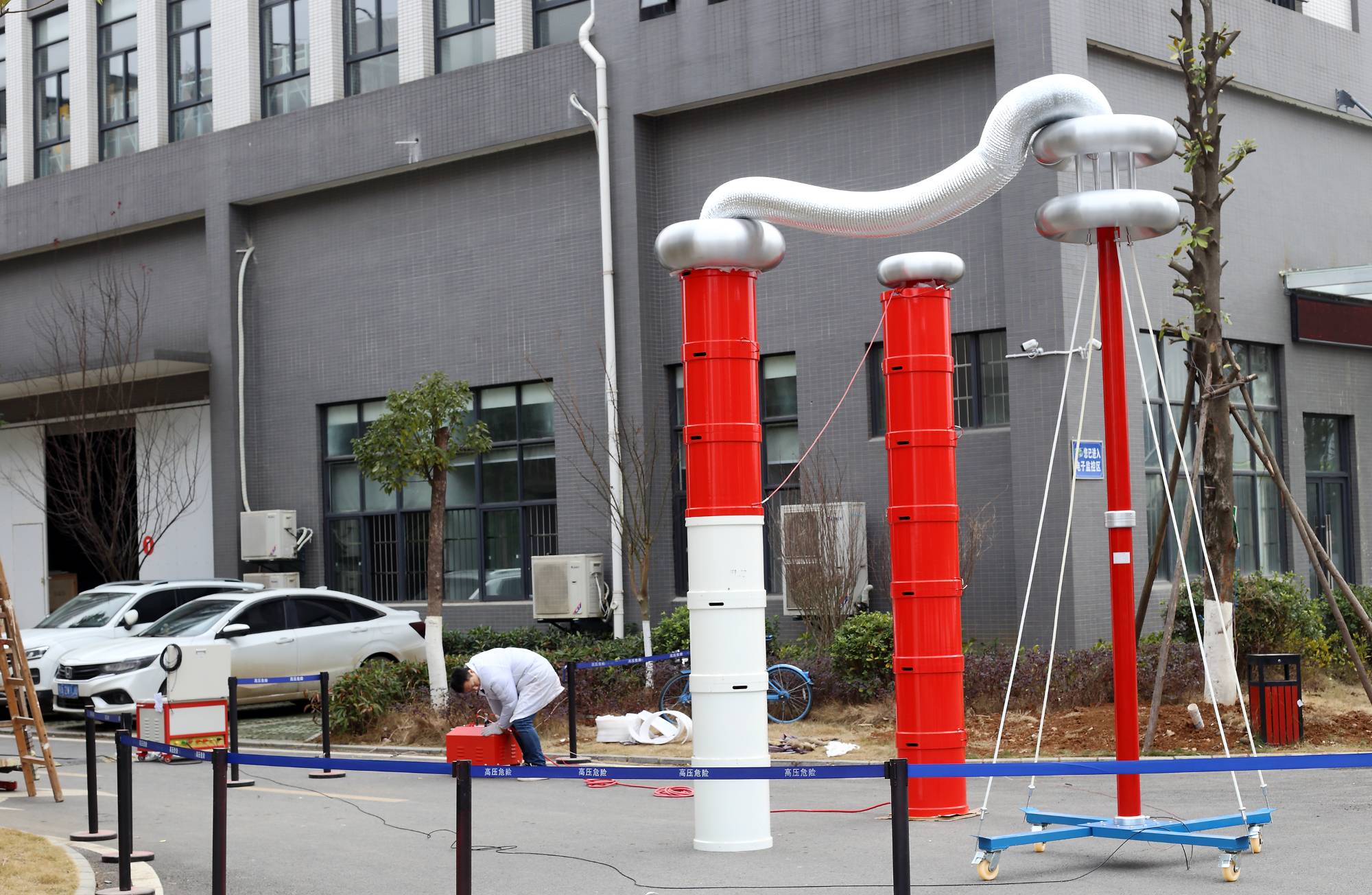
What is variable frequency series resonance?
Simply put, Variable Frequency Series Resonance is a testing method that utilizes the principle of series resonance to create a resonant circuit between the tested equipment (usually high-voltage equipment such as cables and transformers) and the series reactor by adjusting the power supply frequency, thereby generating the required test voltage on the tested equipment. When the inductance (reactor) and capacitance (device under test) of the circuit are equal, the circuit enters a resonant state. At this time, the current flowing through the circuit is very small, but the voltage on the capacitor can reach several times or even tens of times the power supply voltage.
Factors affecting the series resonance effect of frequency conversion
To maximize the effectiveness of variable frequency series resonance testing, several key factors need to be considered:
The Q value of a resonant circuit: The higher the Q value, the greater the amplitude of the overvoltage generated during resonance, and the higher the testing efficiency. It is related to the loss of the circuit, the smaller the loss, the higher the Q value.
Frequency selection: Accurate frequency adjustment is the key to achieving resonance. Improper frequency may result in test failure or equipment damage.
Stability of power supply: A stable power output is the foundation for obtaining accurate test results.
The capacitance of the test equipment: This is an important component of the resonant circuit, and its variation will directly affect the required resonant frequency.
Tools and associations for improving efficiency
In practical operation, the intelligent variable frequency series resonance test device is the core tool. Taking the series of products produced by Wuhan UHV Power Technology Co., Ltd. as an example, they usually integrate advanced digital control technology, which can accurately automatically adjust the frequency, quickly find the resonance point, and monitor the testing process in real time.
This technology is closely related to the withstand voltage test and partial discharge detection of high-voltage electrical equipment. Through frequency conversion series resonance, we can obtain sufficiently high test voltage with lower power supply, thus efficiently completing AC withstand voltage tests on large generators, transformers, high-voltage cables and other equipment. This not only greatly reduces the requirements for the test power supply, but also significantly improves the safety and convenience of testing.
How can we do better?
To use frequency conversion series resonance technology more efficiently, you can start from the following aspects:
Familiar with equipment operation: Fully understand the various functions and operating procedures of the variable frequency series resonant device used, especially paying attention to its automatic frequency modulation and sweeping functions.
Accurate calculation and estimation: Prior to the experiment, the required test voltage and possible resonant frequency range are estimated based on the parameters of the tested equipment (such as electrical capacity) and the technical specifications of the equipment from Wuhan UHV Power Technology Co., Ltd. This helps to shorten the time required to locate the resonant point.
Pay attention to the on-site environment: keep the test site clean and dry, and avoid external interference affecting the accuracy of test data.
Strengthen personnel training: Ensure that operators have professional electrical knowledge and rich on-site experience, and are able to respond to various emergencies.
Through these methods, we can more effectively utilize variable frequency series resonance technology to ensure the reliable operation of power equipment.
Frequently Asked Questions (FAQ)
Q: What is the difference between frequency conversion series resonance test and power frequency withstand voltage test? A: The variable frequency series resonance test uses a lower power supply and generates high voltage through frequency up conversion, which is suitable for large high-voltage equipment; The power frequency withstand voltage test directly uses the power supply, which requires high power supply and is suitable for small equipment.
Q: Why is the current very small but the voltage very high during the frequency conversion series resonance test? A: This is the principle of series resonance. In the resonant state, the total impedance of the circuit is very small. Although the total current is not large, a resonant voltage far greater than the power supply voltage will be generated at both ends of the inductor and capacitor.
Q: How to choose a suitable resonant reactor for frequency conversion series resonance test? A: It is necessary to select a reactor with appropriate inductance value, insulation level, and capacity according to the capacitance range of the tested equipment and the test voltage requirements, to ensure that it can match and achieve resonance state.
Q: How applicable is the frequency conversion series resonance test to cables? A: Variable frequency series resonance is currently one of the most economical and effective methods for conducting AC withstand voltage tests on high-voltage power cables, especially suitable for long-distance and large section high-voltage cables.
Q: What safety precautions should be taken when using a variable frequency series resonant device? A: It is necessary to strictly follow the safety regulations for high-voltage testing, check whether the equipment connection is firm before operation, ensure good grounding, and prohibit unrelated personnel from approaching during the testing process. After the test is completed, residual charges must be discharged according to regulations.