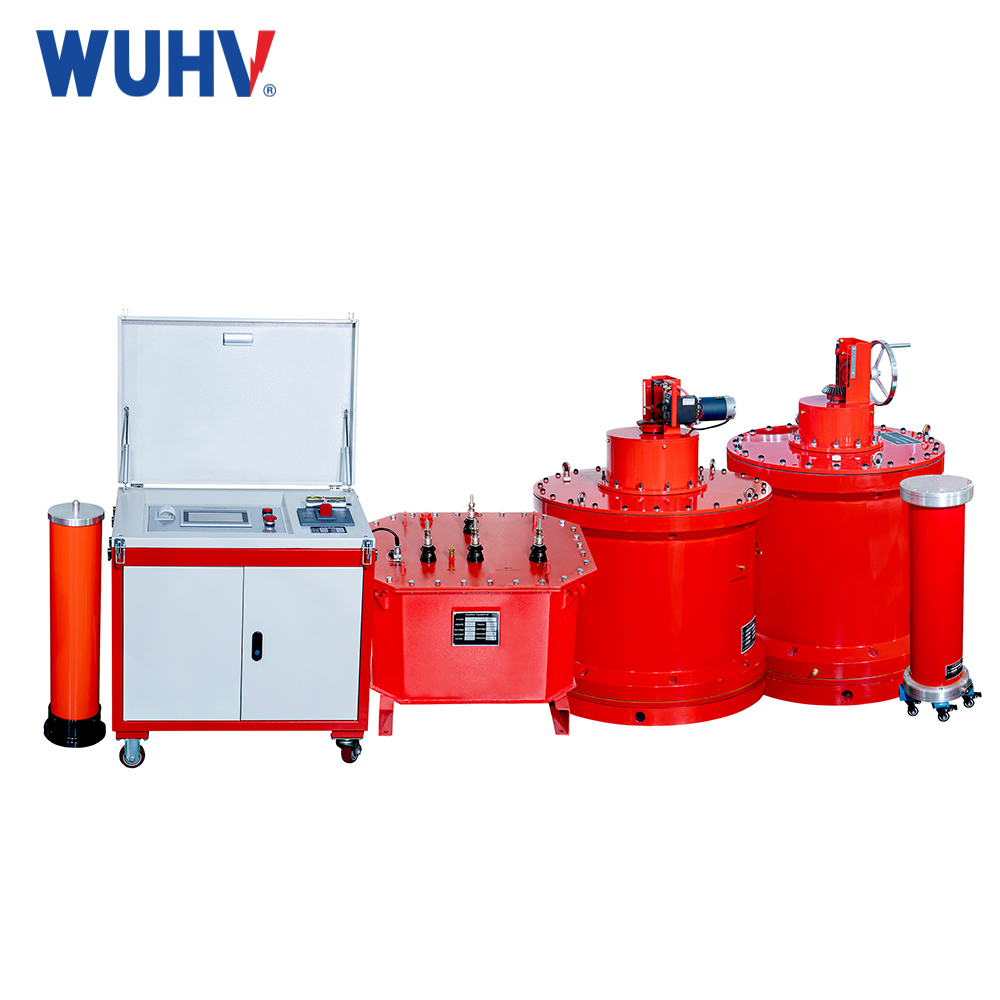
How does the high-voltage electrical equipment, the "heart" of the power system that we rely on for survival every day, maintain healthy operation? In fact, there may be a phenomenon called "partial discharge" quietly occurring inside the device. It is like an "early warning signal" for devices, and if not detected and processed in a timely manner, the consequences can be unimaginable. Today, let's talk about how partial discharge measuring instruments have become a key technology for safeguarding power equipment.
What is partial discharge?
Simply put, partial discharge refers to a small discharge phenomenon that occurs inside the insulation material of high-voltage electrical equipment when the local electric field strength exceeds the breakdown strength of the insulation medium, but the entire insulation system has not yet been broken down. It is like a "small wound" on insulation material, although inconspicuous, it will gradually expand and eventually lead to equipment damage, causing power accidents.
What are the "behind the scenes drivers" that affect partial discharge?
The generation of partial discharge is not caused by a single factor, it is influenced by various "behind the scenes" factors:
Aging and defects of insulation materials: Over time, insulation materials will age, crack, and produce tiny pores, which are all "hotbeds" for partial discharge.
The internal structural design of the equipment: irregular electrode shapes, metal burrs, impurities, etc. may all form high electric fields locally, causing discharge.
Environmental factors such as humidity, pollution, and temperature changes can also accelerate the degradation of insulation materials and increase the risk of partial discharge.
Who is the 'detective' who captures the 'culprit'?
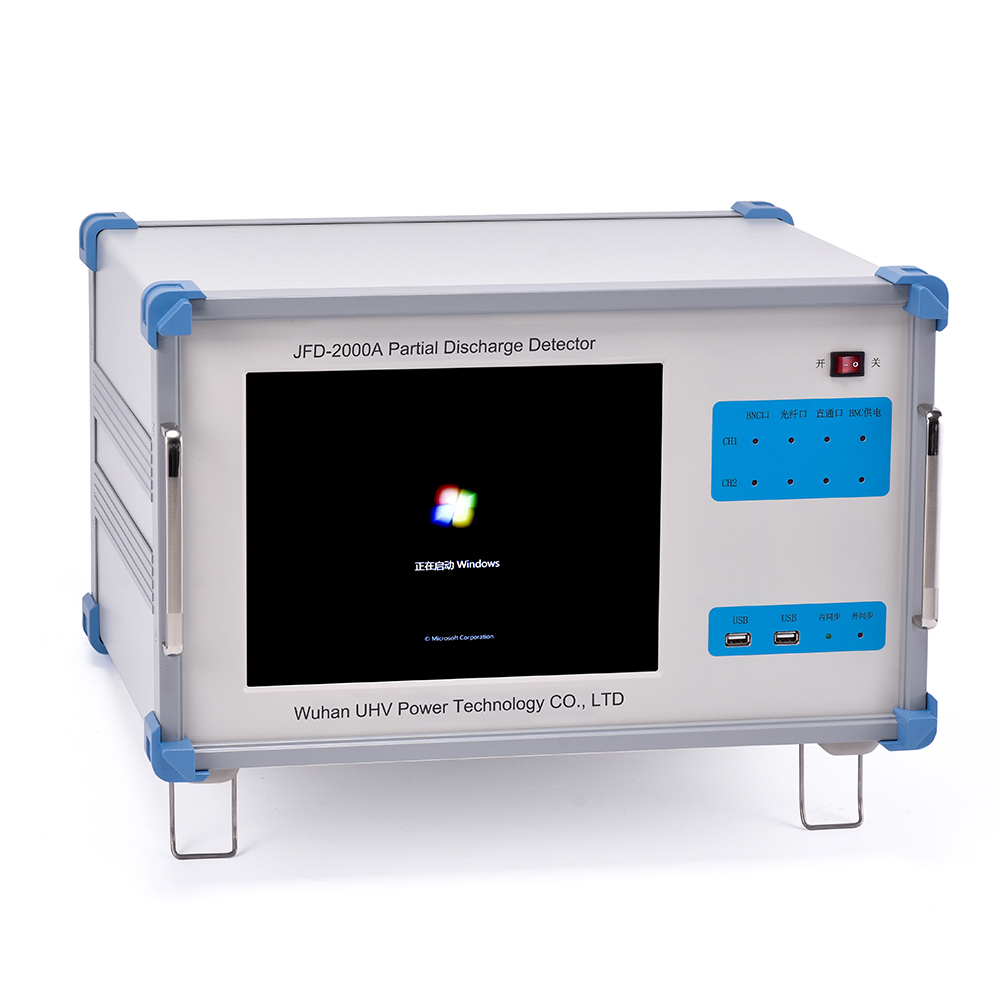
To timely detect and evaluate the hazards of partial discharge, we need professional "detectives" - partial discharge measuring instruments. Wuhan UHV Power Technology Co., Ltd., as a leader in the industry, has developed various high-precision partial discharge detection equipment, which provides strong support for the health monitoring of power equipment.
How do these 'detectives' work?
Signal pickup: During partial discharge, electromagnetic waves, sound waves, light waves, and pressure waves are generated. The measuring instrument captures these signals through specific sensors such as coupling capacitors, high-frequency current probes, ultrasonic sensors, etc.
Signal processing and analysis: The picked up signal is amplified, filtered, and digitized, and then analyzed through advanced algorithms to identify the characteristics of discharge, such as discharge amount, discharge frequency, discharge phase, etc.
Result presentation: Finally, the analysis results will be presented to the operators in the form of intuitive charts or data, making it easier for them to determine the insulation status of the equipment.
What is the connection between partial discharge measuring instruments and other technologies?
The application of partial discharge measuring instruments is closely related to high-voltage testing technology, insulation diagnosis technology, equipment status monitoring, and power safety. It is an important tool for evaluating equipment insulation performance, warning of faults, and predicting equipment lifespan.
How can we do better? ——Improve the accuracy and efficiency of partial discharge measurement
In order to conduct partial discharge measurements more accurately and efficiently, we can start from the following aspects:
Choose sensors with high sensitivity and wide bandwidth: capable of capturing weaker and more complex discharge signals.
Adopting advanced signal processing algorithms: effectively filtering out interference signals, improving signal-to-noise ratio, and accurately identifying discharge characteristics.
Combining multiple measurement techniques, such as simultaneous use of electric pulse method and ultrasonic method, cross validation from different dimensions can improve the reliability of diagnosis.
Perform on-site calibration and maintenance to ensure the accuracy and stability of measuring instruments.
Utilizing big data and artificial intelligence: analyzing historical data to establish more accurate predictive models.
Wuhan UHV Power Technology Co., Ltd. is constantly exploring and innovating in these areas, committed to providing users with more intelligent and reliable partial discharge detection solutions.
Frequently Asked Questions (FAQ)
What are the main applications of partial discharge measuring instruments for power equipment? Partial discharge measuring instruments are widely used in various high-voltage electrical equipment such as high-voltage switchgear, transformers, cables, bushings, generators, etc.
What are the hazards of partial discharge to equipment? Partial discharge will gradually erode insulation materials, leading to a decrease in insulation performance, which may ultimately cause short circuits, grounding faults, and even equipment burnout, resulting in power outages.
What conditions are required for partial discharge measurement? It usually requires professional measuring instruments, qualified operators, and an understanding of the structure and operating status of the tested equipment. During the measurement process, attention should be paid to safety operating procedures.
Can partial discharge measurements be conducted while the equipment is running with power on? Yes, partial discharge measurement is usually carried out when the equipment is running with electricity, which is an important manifestation of its role as an online monitoring technology.
Why is Wuhan UHV Power Technology Co., Ltd. highly regarded in the field of partial discharge measurement? Wuhan UHV Power Technology Co., Ltd., with its profound accumulation and continuous technological innovation in the field of high voltage power technology, has developed a series of high-performance and high-precision partial discharge detection products, which have won wide recognition in the market.