Product Introduction
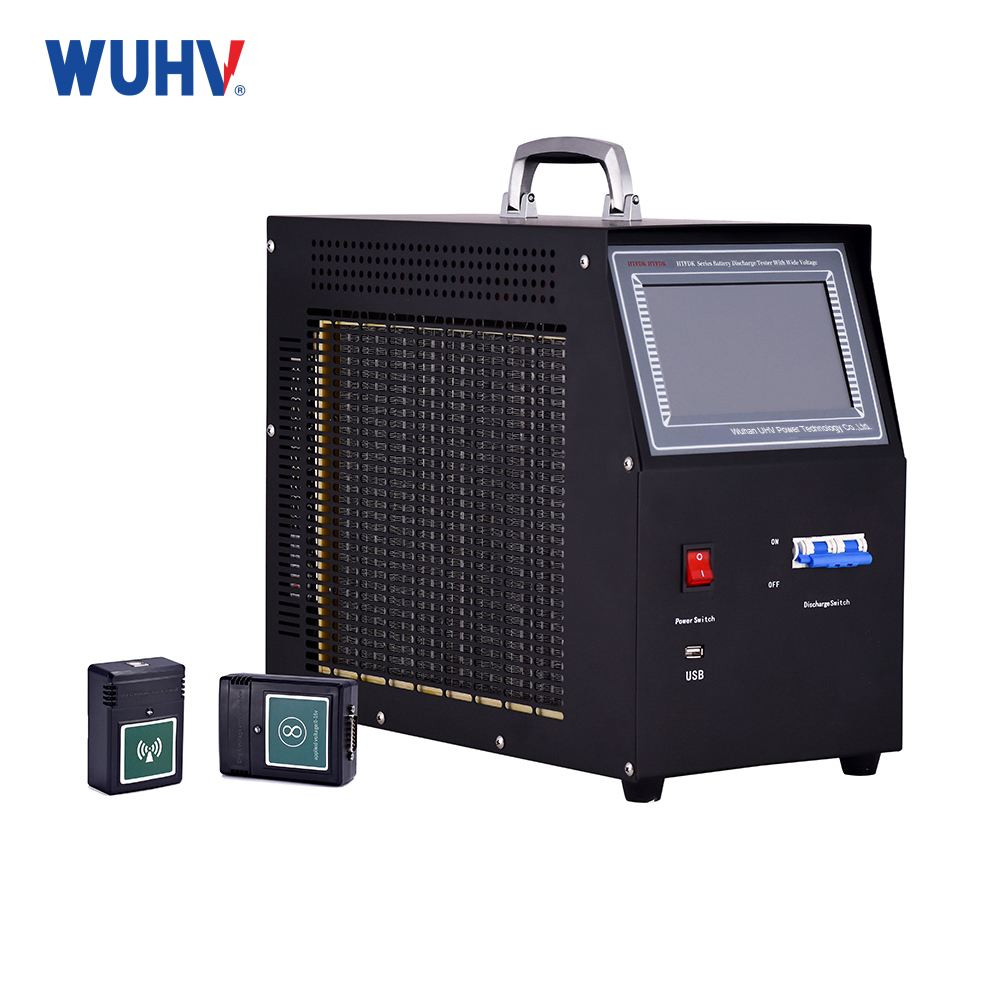
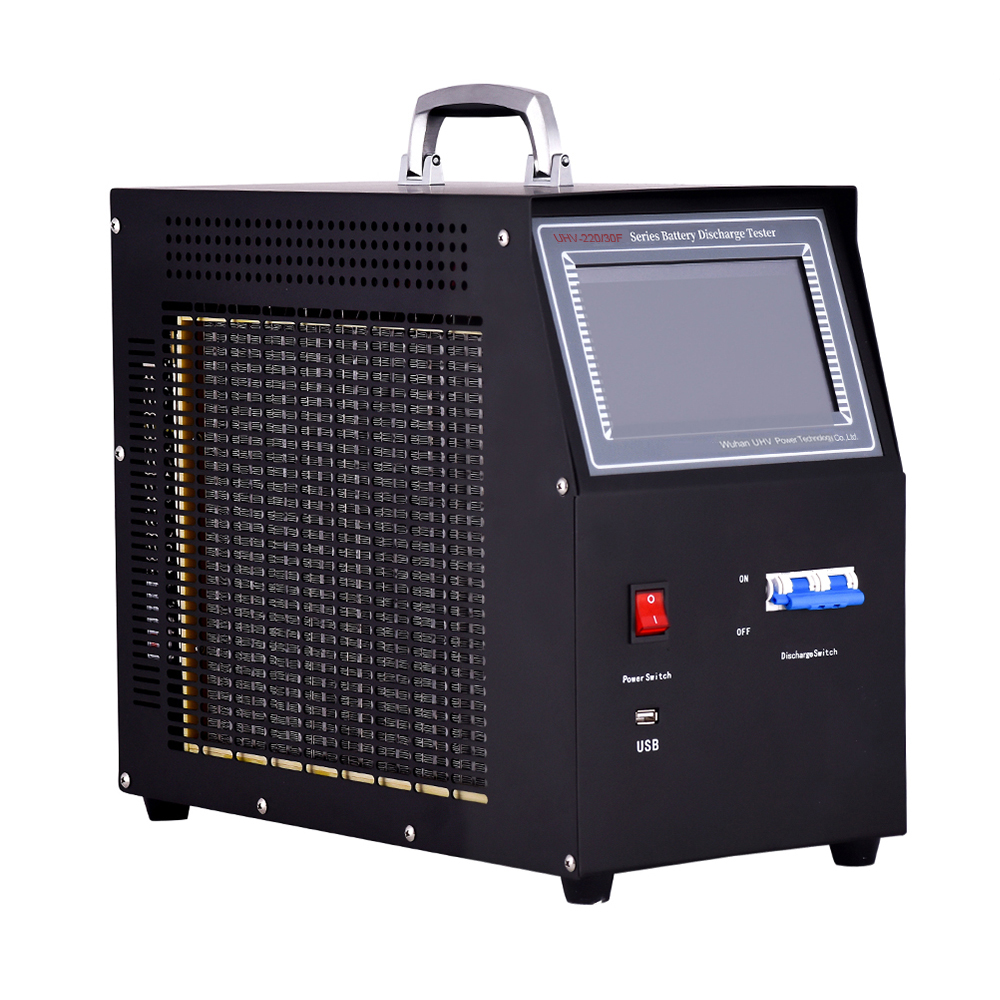
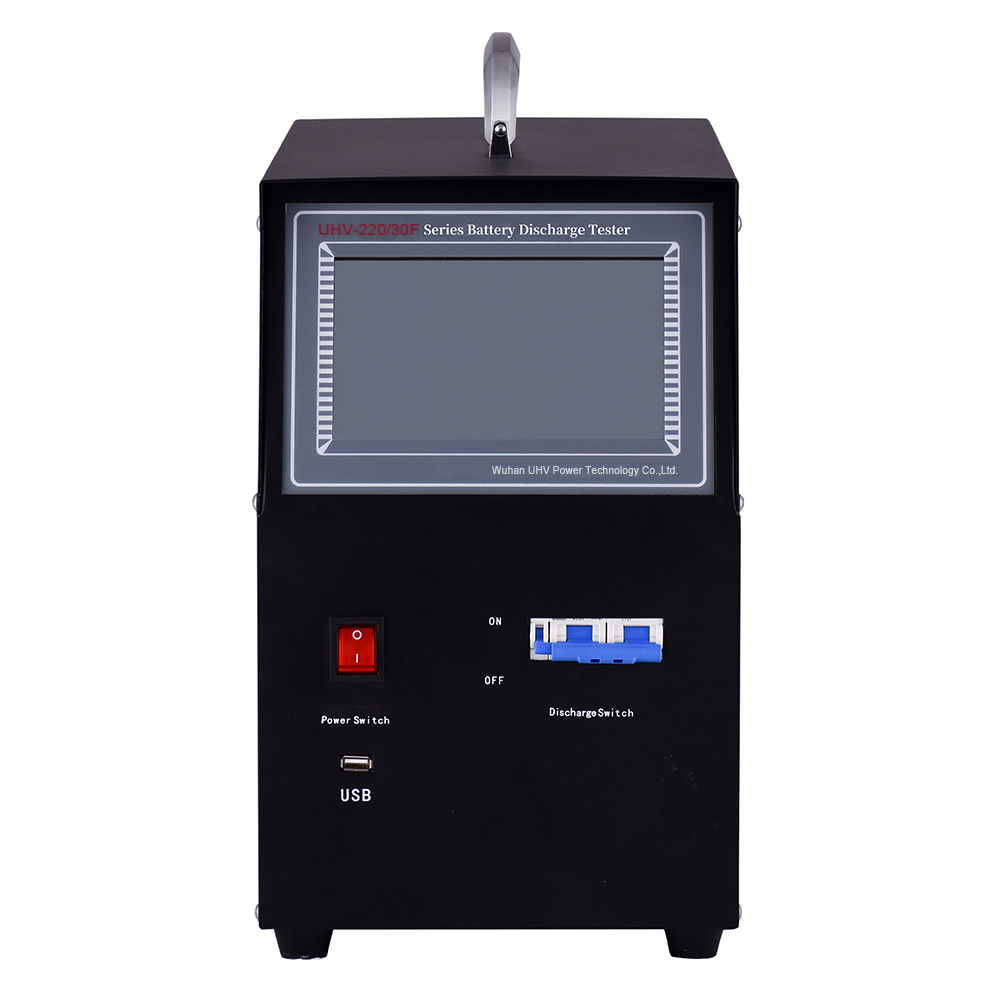
Wuhan UHV Power Technology Co.,Ltd., is a professional manufacturer and supplier of high-voltage power testing equipment in China.After years of research and development, our company has successfully developed a series of high-intelligence, high-precision battery discharge testers using our proprietary technology.
The discharge tester can operate in offline mode, using the battery as the discharge load. By continuously regulating the discharge current, it maintains a constant discharge current at the set value. During discharging, the instrument will automatically stop when any of the following conditions is met: the battery terminal voltage or individual cell voltage falls to the preset lower limit, the set discharge time is reached, or the set discharge capacity is achieved. Throughout the process, all valuable and continuous real-time data is recorded.
The battery discharge tester system uses wireless relay access to collect voltage monitoring information from individual cells in a simple, safe, and accurate manner.
The tester features a highly user-friendly interface, allowing users to complete various settings and data queries under menu prompts. Discharge process data can be saved in the device's internal memory and transferred to a USB drive via the data interface. The data can then be analyzed using dedicated PC software to generate required curves and reports.
The battery discharge tester is equipped with comprehensive protection functions, including audible and visual warnings, as well as clear on-screen interface prompts to ensure safe operation.
 |  |  |
Product functions
1. Battery capacity testing
Tests the actual battery capacity (Ah)
Determines whether the battery meets the rated capacity
Evaluates the degree of battery aging
2. Charging test function
Simulates the actual charging process
Detects changes in charging voltage and current
Analyzes battery charging performance
3. Discharging test function
Performs constant-current / constant-power discharge on batteries
Detects the battery's continuous power supply capability
Verifies the reliability of backup power sources
4. Battery state of health (SOH) assessment
Analyzes battery capacity degradation
Determines the remaining service life of the battery
Assists in developing maintenance or replacement plans
5. Battery cycle life testing
Automatically executes charge-discharge cycles
Records battery performance changes over time
Used for battery life verification and R&D testing
技術的パラメータ
| 作業モード | 単独使用可能、同時使用可能、遠隔制御および状態監視可能 | ||||
| Applicable battery | 48V | 110V | 220V | 380V | other electrical test groups can be customized |
| 放電電圧 | 0~60V | 88~132V | 176V~275V | 300V~456V | |
| 放電電流 | 0~150A | 0~100A | 0~100A | 0~30A | |
| 電流の精度 | 1% | ||||
| 電圧精度 | 0.5% | ||||
| モノマー電圧精度 | 0.2% | ||||
| モノマー電圧 | 0.500V~16.00V(resolution 1mv) | ||||
| 充放電時間 | 0~99時間59分 | ||||
| 電源 | AC:220V | ||||
| 冷却方法 | 強制空冷 | ||||
| Packaging | aluminum alloy pull box | ||||
作業環境
| 放熱 | 強制空冷 |
| 温度 | working range: -5 ~ 50℃ storage temperature: -40 ~ 70℃ |
| 湿度 | relative to humidity0 ~ 90% (40±2℃) |
| 高度 | 定格高度: 4000 m |
| ノイズ | ﹤60dB |
動作電源
| 電圧 | 単相3線式:AC220V(-20%~+30%)、周波数:45~65Hz |
| 耐電圧試験 | 入力 - ハウジング: 2200V DC 1min |
| 入出力:2200V DC 1min | |
| 出力 - ハウジング: 700V DC 1min | |
| 安全 | EN610950に準拠 |
配線
| AC入力 | Gb socket, suitable for 1 ~ 1.5mm2ケーブル |
| 直流出力 | instrument 25 mm2Cable quick connect plug (red positive black negative) |
Product Characteristics
Constant Current Discharge Function: Continuously adjustable current enables accurate battery capacity measurement.
Wireless Cell Voltage Monitoring: Each wireless monitoring module can simultaneously monitor up to 12 individual cells.
PC Analysis Software with Remote Control: Includes Chinese-language background analysis software and supports remote-controlled discharge functionality.
Data Interface & Storage: The host is equipped with a USB interface and 2GB of high-capacity internal data storage.
Dual CPU Operation: Dual processors work together to ensure test safety, reliability, and accuracy.
Flexible Discharge Control: Discharge can be paused and parameters modified without terminating the discharge test.
Application Scenarios
Substations
Testing the capacity and state of health (SOH) of DC screen battery banks
Used for periodic battery maintenance and acceptance testing
Power plants
Testing the performance of backup power batteries at power stations
Ensuring reliable power supply during emergency situations
Telecom base stations / communication rooms
Testing the capacity of communication backup batteries
Ensuring operation of communication equipment during power outages
Data centers / UPS rooms
Testing the discharge capability of UPS battery banks
Preventing backup power failure
New energy storage power stations
Testing the performance of energy storage battery clusters
Used for lithium battery capacity and cycle life testing
Battery manufacturers
Used for factory testing of cells, battery modules, and PACKs
Performing charge-discharge cycle testing
New energy vehicle industry
Testing the performance and degradation of power batteries
Used for battery maintenance and R&D analysis
Research institutions / laboratories
Used for new battery R&D and performance research
FAQs
Q: Why is battery charge-discharge testing necessary?
A: Through testing, it is possible to:
Determine whether the actual battery capacity meets the specified standards
Identify batteries with capacity degradation
Prevent backup power failures in advance
Extend battery service life
Improve the reliability of the power supply system
Q: Can the battery charge-discharge tester determine whether a battery needs to be replaced?
A: Yes. Through capacity testing, discharge curve analysis, and performance data evaluation, it can determine whether the battery has experienced capacity degradation, aging, or performance abnormalities, thereby assisting in the decision of whether replacement is necessary.
Q: Why is a battery charge-discharge tester needed in substations?
A: The DC system in substations relies on batteries to provide backup power. Through charge-discharge testing, it can be confirmed whether the battery bank has the reliable power supply capability required during power outages or emergency situations.
Q: Why do batteries require periodic discharge testing?
A: Under long-term floating charge conditions, batteries may experience issues such as capacity degradation and plate sulfation. Regular discharge testing can identify potential problems in advance.
after-sale service